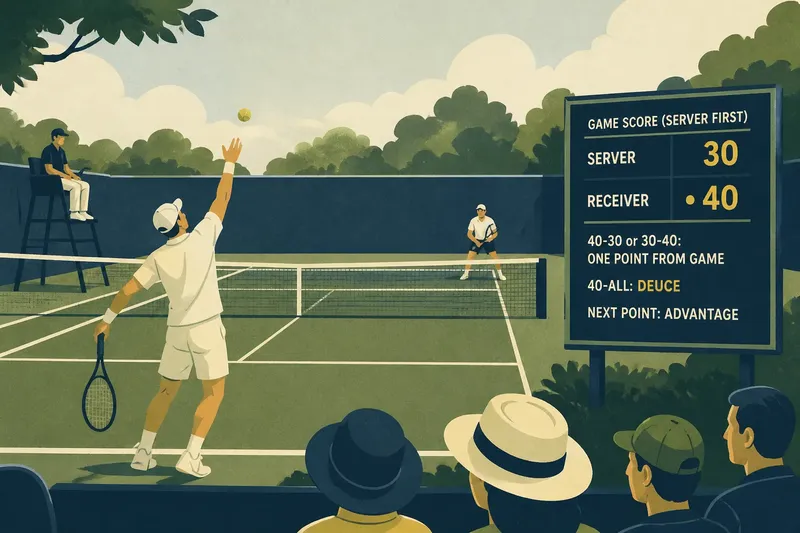
Singles or Doubles: What the Court Lines Change
Singles or doubles court lines can make the same shot fair or out. Learn which sidelines count in each format and how to read the court quickly.
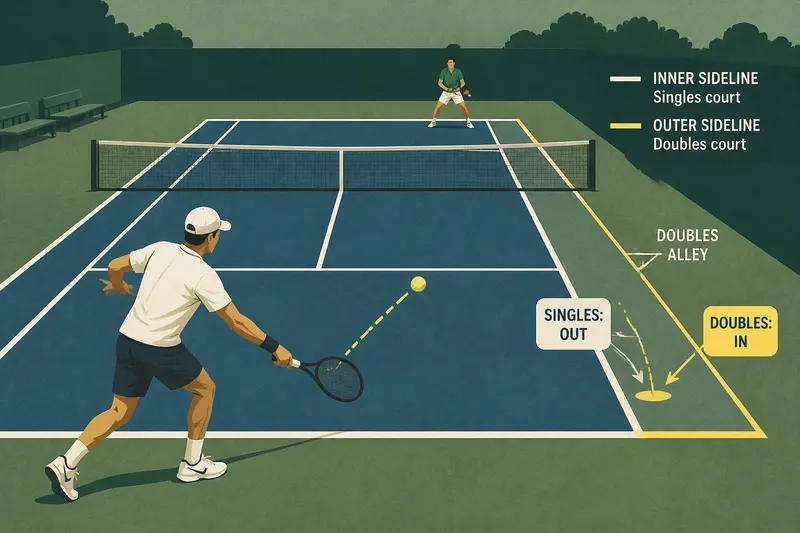
Singles or doubles court lines decide whether a shot lands in or out, and the decisive change is the outer sideline. In singles, the inner sidelines mark the width of the court; in doubles, the outer sidelines count, making the playable court wider.
That distinction is easiest to follow if you first identify the format, then trace the ball’s landing point against the correct boundary. The net, service lines, center service line and baselines still shape play in both formats, but the doubles alleys are part of the court only when the point is played as doubles.
Start with the format
For a singles match, use the narrow court between the inner sidelines. A ball that lands in the alley between an inner and outer sideline is out, even though that strip is visibly inside the larger rectangle painted on the ground.
For a doubles match, use the wider court between the outer sidelines. The alleys now belong to the playing area, so a groundstroke that lands there can be good. A ball beyond the outer sideline is out.
This format-based choice matters even when a player is standing in an alley or a ball passes close to a line. The court’s boundaries are set by the match format, not by the player’s position or by which side of the court the ball travels through.
Read the lines in singles
In singles, the inner sidelines are the long side boundaries. The baselines at the back of the court define the other ends. A ball touching a boundary line counts as landing in, because the line itself is part of the area it marks.
The outer doubles sidelines do not extend the singles court. They may still be visible, but they serve no boundary role for a singles rally. If the ball lands wholly in the alley, it is out; if it lands on or inside the inner sideline, it is in.
Imagine a singles rally in which a player sends a crosscourt shot toward the right-hand alley. If the ball lands between the inner and outer sidelines, the opponent should treat it as out. If it clips the inner sideline, it is in, even if most of the mark or ball appears close to the alley.
Read the lines in doubles
In doubles, the outer sidelines form the side boundaries for rallies. The alley between each inner and outer sideline adds width to the court. A ball landing in that strip is good, provided it has not crossed another boundary such as the baseline.
The inner sidelines remain useful visual guides, but they do not end a doubles rally. If a ball lands just outside an inner sideline and inside the outer one, it is still in. This is a common source of confusion for viewers who know the singles court well and instinctively treat the inner line as the edge.
Say you are watching a doubles point and a return lands near the left alley. If the ball touches the outer sideline, it counts as in; if it lands beyond that line, it is out. The partner’s location near the alley does not change the call—the outer sideline defines the boundary.
Service boxes stay narrow
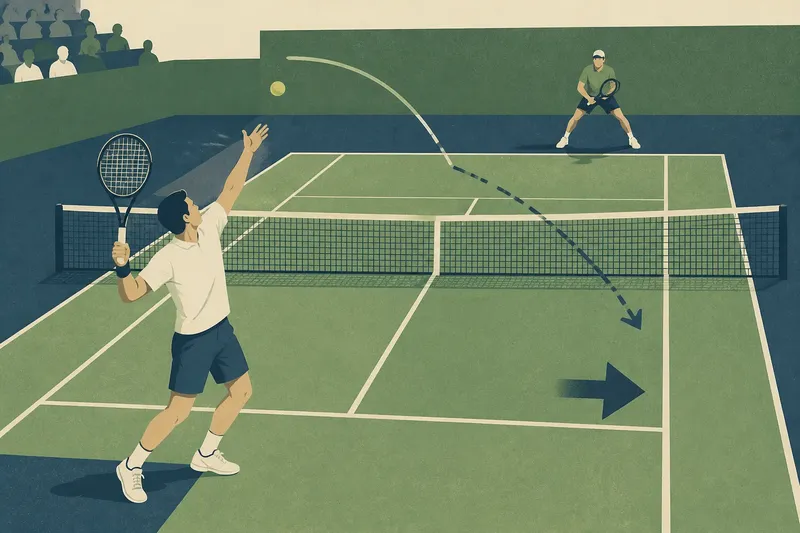
The wider doubles court does not make the service boxes wider. On a serve, the ball must land in the diagonally opposite service box, bounded by the net, the service line, the center service line and the relevant singles sideline.
So a serve that lands in the doubles alley is not a legal serve, even during a doubles match. The alley expands the area for rallies, not the target area for the serve. After the serve is in play, the full doubles width applies to the rally.
This is why a serve can look as though it has landed inside the large outer rectangle and still be a fault: the relevant boundary for the service box is the inner sideline. For a rally shot, by contrast, that same alley may be valid ground in doubles.
Use the boundary by situation
When you are unsure which side line matters, match the line to the moment in play:
- Singles rally: Use the inner sidelines. The alley is out.
- Doubles rally: Use the outer sidelines. The alley is in.
- Any serve: Use the inner sideline to judge the service box, even in doubles.
- Ball touching the applicable line: Call it in; boundary lines count as part of the court.
- Ball beyond the applicable line: Call it out, even if it remains within another painted rectangle.
These checks sort out most close-looking shots without requiring you to memorize every line on the court. First identify whether you are judging a serve or a rally, then apply the boundary for that situation.
Why do two sidelines appear?
Which line counts in singles?
The inner sideline marks the side edge for a singles rally. The outer doubles sideline is outside the singles playing area, so a ball landing in the alley is out.
Which line counts in doubles?
The outer sideline marks the side edge during a doubles rally. The alley between the inner and outer lines is included, while a ball beyond the outer line is out.
Does the alley count on a doubles serve?
No. A serve must land in the diagonal service box, whose side edge is the inner sideline. The doubles alley becomes part of the playing area only once the serve has been returned into the rally.
Does a ball on the line count as in?
Yes, when it touches the boundary line that applies to that shot. For a singles rally or a serve, that means the relevant inner line; for a doubles rally, it can mean the outer sideline.
Track a close call
On television or from the stands, locate the inner and outer sidelines before the point gets fast. The inner line is closer to the center of the court, while the outer line sits farther toward the benches or surrounding area. Once you see the alley as a distinct strip, it becomes easier to judge whether a shot crossed the right boundary.
For a close call, watch where the ball first contacts the court, not where it bounces afterward or where a player reaches for it. A ball can land in and then kick out, or land out and spin back. The first bounce determines whether it touched the relevant playing area.
It is not worth trying to infer a call from the player’s movement alone. A player may let a ball go because they expect it to be out, but their choice does not establish where it landed. Keep your attention on the first contact and the correct sideline.
Choose the right boundary
For the question “singles or doubles court lines,” the practical answer is simple: use the inner sidelines for singles and for every serve; use the outer sidelines for doubles rallies. The alleys change status with the situation, not with the ball’s direction or the players’ positions.
Next time you watch a match, identify the format before judging a shot near the side. Then distinguish a serve from the rally that follows. That small pause is enough to make the court’s extra lines readable and to explain why one alley ball is out while another is plainly in.