The Myth of the Perfect First Serve
The perfect first serve in tennis is not just about speed. Learn how placement, spin, and variation shape the return and open the point.
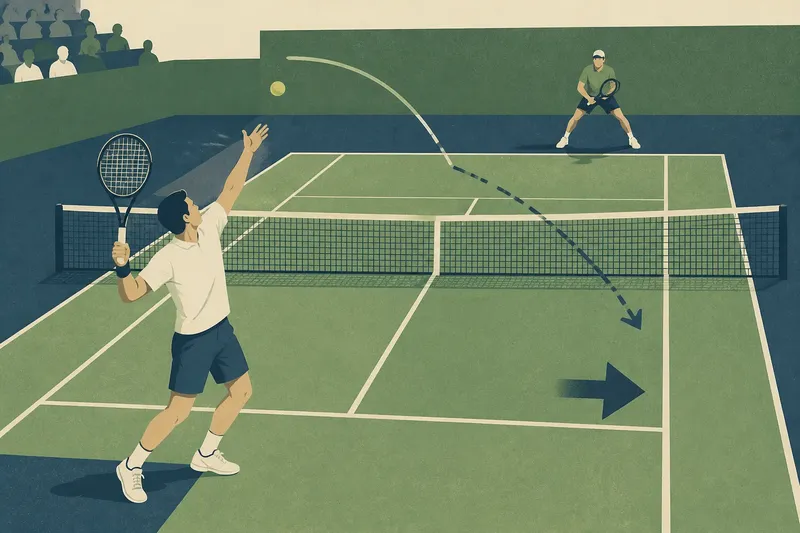
A first serve that lands hard in the middle can still give the returner an easy swing. The perfect first serve in tennis is not simply the fastest one; it is the serve that makes the return awkward and gives the server a useful next ball. Watch where it lands, what it does after the bounce, and how it changes the returner’s position.
Speed is only one clue
A fast serve can rush a returner, but pace alone does not tell you whether the serve worked. If the ball arrives comfortably near the receiver’s hitting zone, the returner may block it back with control. A slightly slower serve directed away from that zone can be harder to handle.
Look at the return, not just the speed. A late contact, a cramped swing, a return floating short, or a ball sent well beyond the baseline all suggest the serve disrupted the receiver. A clean, deep return suggests the server has not yet taken control, even if the serve looked spectacular.
Speed still matters: it can reduce the time available to react and make a well-placed serve even more demanding. The useful question is not “How fast was it?” but “Did the pace and direction combine to limit the return?”
Placement changes contact
Serve placement is commonly described through three targets: the center line, the body, and the wide side of the service box. Each asks the returner to solve a different problem. A serve near the center line can pull the receiver toward the middle; a wide serve can stretch the reach; a body serve can crowd the swing.
The target only makes sense in relation to the receiver’s position and handedness. A wide serve in the deuce court and a wide serve in the ad court do not send the ball in the same direction across the court. A viewer can follow the tactic by noticing whether the receiver must move sideways, turn the shoulders, or make room for the racket.
Placement also shapes the next shot. Pull a returner off the court and the server may have open space to hit into. Serve toward the body and the return may come back short or toward the middle, giving the server a chance to attack without attempting a winner immediately.
Spin alters the bounce
Spin can make a serve behave differently after it lands. A slice serve tends to curve sideways, while a kick serve can jump higher and push the receiver back. The precise bounce depends on the player’s technique and the court surface, but the viewing cue is simple: notice whether the ball moves away from the racket’s comfortable contact point.
That change matters because a returner must adjust both position and racket face. A ball that skids away can pull the receiver wide; a high, lively bounce can force contact above the usual strike zone. The server may use spin to create a difficult return even without aiming for maximum pace.
Spin also helps explain why two serves traveling at a similar speed can feel quite different to return. The ball’s flight and bounce are part of the challenge, not decorative details. Keep an eye on the receiver’s recovery step after contact: a serve that sends them off balance can leave the court open.
Variation keeps targets uncertain
A server who repeats one location gives the receiver a pattern to anticipate. Even a strong serve can become easier to read if the returner can lean toward the likely direction before the toss. Changing between body, wide, and center targets makes that early positioning less reliable.
Variation does not mean choosing a different serve at random every time. A player may use the same general motion while changing direction or spin, or show a familiar pattern before serving somewhere else. The point is to make the receiver wait for the ball’s actual path instead of committing too soon.
Imagine a right-handed server who has repeatedly sent slice serves wide in the deuce court. On a later point, the server aims closer to the body. The expected observable result is that the receiver has less room to swing freely, even if the serve is not faster than the earlier ones.
What should you watch?
Why does a serve to the body work?
A body serve takes away room for the receiver’s arms and racket, so they may need to jam the swing or move out of the ball’s path. It is especially useful when the receiver has been setting up early for a wide ball.
Does a slower first serve mean a weaker tactic?
No. A slower serve can still be effective if its placement or spin leads to a rushed, off-balance, or predictable return. Judge what happens to the receiver and the next shot, not the speed in isolation.
How can I tell if a serve opened the court?
Watch the receiver’s position after the return. If they are pulled wide or pushed deep, notice whether the server directs the next ball into the space they left behind.
Why does a server change direction after a fault?
A fault gives the server another chance to begin the point, and repeating the same target may let the receiver anticipate. A change of direction or spin can alter the returner’s starting read, though the server still has to land the ball in the service box.
Read the first two shots
To follow a serve tactic, track the sequence rather than awarding the point to the most dramatic hit. First note the target and the bounce; then see whether the return is controlled, defensive, or difficult to reach. Finally, watch what the server does with the reply.
For instance, say you are watching a left-handed server in the ad court. The server sends a slice wide, the receiver reaches and returns short toward the center, and the server steps in to direct the next shot toward the open side. The useful observation is the chain: the serve created a stretched return, and the return shaped the attack.
Do not spend much effort trying to guess a serve’s exact speed from the stands. Broadcast graphics may provide a reading, but the tactic is often clearer in the receiver’s movement and contact. A simple note—wide, body, or center; high bounce or skid; comfortable return or awkward one—will tell you more about the point’s setup.
Judge the serve by its job
The perfect first serve is a tactical choice, not a single ideal ball. Pace can hurry the receiver, placement can force uncomfortable contact, and spin can change the bounce; variation makes those tools harder to predict. The best clue is the return the serve produces and the opportunity that follows.
When you next watch a service game, pick one detail to track: target, bounce, or returner’s balance. That small focus turns a serve from a brief burst of power into the opening move of the point.